

Strategy
Preflop range theory for 6-max cash games, with the charts and the reasoning behind them.
Nit in Poker: What It Means and How to Beat One
A nit in poker is a player who plays far too few hands. How tight that is next to solver ranges, what a nit folds, and how to beat one.
Folding in Poker: What a Fold Means and How Often to Do It
Folding in poker means giving up your hand and the chips you put in. The rules, how often solver ranges fold by seat and spot, and which hands never fold.
Kicker in Poker: What It Is and How Often It Decides the Pot
A kicker in poker is the side card that breaks a tie between equal hands. When it counts, how often it decides a showdown, and what a better one is worth.
All-In Poker: The Rules, Side Pots and When to Go All In
Going all in in poker means betting every chip you have. The rules, how side pots work, and how often solver ranges shove or call an all-in, by hand.
Calling in Poker: What a Call Means and When to Call
Calling in poker means matching the current bet. The rules of a call, and how often solver ranges call before the flop, by spot, seat and hand.
Heads-Up Poker: Rules, Hand Chart and How Many Hands to Play
Heads-up poker is poker between two players. The rules, a hand chart of all 169 hands, and how wide the button and the big blind should play.
Bluffing in Poker: Calculator, How Often and Which Hands
Bluffing in poker is betting a worse hand to make a better one fold. A bluff calculator, how often to bluff, and the hands solvers bluff with.
Fold Equity in Poker: Calculator and Solver Numbers
Fold equity is the value a bet gets from the times your opponent folds. A calculator for any bet, the formula, and how often solver raises win at once.
Cold Call in Poker: What It Means and When to Do It
A cold call in poker is calling a raise with no chips in the pot yet. What counts, how often each seat should do it and which hands, from solver ranges.
PFR in Poker: What It Means and What a Good PFR Is
PFR in poker is the share of hands a player raises before the flop. What counts, what a good PFR is by seat, and what PlusEV's solver ranges raise.
Implied Odds in Poker: What They Are and How to Use Them
Implied odds are the money you expect to win after you hit. The formula, what each draw needs, and how PlusEV's solver ranges play small pairs at each price.
Hijack in Poker: What It Is and How to Play It
The hijack in poker is the seat two to the right of the button. Which hands to open, what happens after you raise and how to handle a 3-bet, with solver data.
Squeeze in Poker: When to Raise Over an Open and a Call
A squeeze in poker is a re-raise over an open and a call. Which hands to squeeze, how big, and why solver ranges are no wider than a normal 3-bet.
Dealer Button in Poker: How It Works and How to Play It
The button in poker marks the dealer and acts last after the flop. How the dealer button moves, which hands to open from it and how to handle a 3-bet.
Suited Connectors in Poker: When to Play Them
Suited connectors are two consecutive cards of one suit, like 8♥7♥. How often they hit, how often they win, and when a solver plays them from each seat.

Ace-King in Poker: How to Play Big Slick
Ace-king, or big slick, misses the flop two times in three and still shoves over a 4-bet more often than queens. How often it wins and how a solver plays it.
Pocket Kings: How to Play KK, With Solver Data
Pocket kings are the second best starting hand. How often they win, how often an ace flops, and how a solver plays kings facing raises, 3-bets and 4-bets.
Pocket Jacks: Why JJ Is So Hard and How to Play It
Pocket jacks are the most misplayed pair in poker. How often they win, how a solver plays them facing raises, 3-bets and 4-bets, and when jacks fold.
Offsuit in Poker: What It Means and What It Costs
Offsuit means your hole cards are different suits. How much worse an offsuit hand is than a suited one, and which offsuit hands are worth playing.

Pocket Queens: How to Play QQ, With Solver Data
Pocket queens are the third best starting hand. How often they win, how a solver plays them facing raises, 3-bets and 4-bets, and when queens fold.
Pocket Aces: How to Play AA and How Often It Wins
Pocket aces are the best starting hand in poker. How often you get them, how often they win, and how a solver plays them in every preflop spot.
Cutoff in Poker: How to Play the Cutoff
The cutoff in poker is the seat to the right of the button. Which hands to open, how often to steal the blinds and how to handle a 3-bet, with solver data.

Under the Gun in Poker: How to Play UTG
Under the gun in poker is the first seat to act preflop. Which hands to open from UTG, what happens after you raise and how to handle a 3-bet, with solver data.
Poker Ranges: What a Range Is and How to Read One
Poker ranges explained: what a range is, how to read a range chart and shorthand like ATs+, and how a range narrows through a hand, step by step on the grid.
How to Memorize Preflop Ranges (and Keep Them)
How to memorize preflop ranges: learn where each range ends, drill the hands whose answer changes, and space your reviews. With PlusEV data and flashcards.
Poker Combos: How to Count the Hands in a Range
Poker combos explained: why ace-king is 16 hands and aces only 6, how the cards you can see change the count, and a combo counter loaded with solver ranges.
Pocket Pairs in Poker: How to Play Every Pair
How to play pocket pairs from aces to deuces. Which to raise from each seat, when to call or fold, set mining odds, and a calculator for your own spot.
What Is a 4-Bet in Poker? Ranges, Bluffs and Sizing
A 4-bet is the re-raise over a 3-bet. What it means, how often it happens, which hands to 4-bet for value and as a bluff, and how big to make it.
What Is a Straddle in Poker? Rules, Types and Strategy
What a straddle is in poker, who acts when, the UTG, button and Mississippi straddle, what it does to the price of every call, and whether you should straddle.

Poker Odds: Texas Hold'em Odds and Probabilities
Texas Hold'em odds for every stage of a hand, from the deal and the flop to draws, preflop matchups and final hands, worked out with our own hand evaluator.
Poker Cheat Sheet: Free Printable PDF for Texas Hold'em
A free two-page poker cheat sheet to print or save, with hand rankings, exact odds, pot odds, position and solver opening ranges for every seat.
Texas Hold'em Rules: How to Play, Step by Step
The rules of Texas Hold'em in plain words, the blinds, the four betting rounds, what you can do on your turn, how the showdown works and who wins the pot.
Best Starting Hands in Poker, Ranked
The best starting hands in Texas Hold'em, how often you are dealt them, why the top-10 lists disagree, and why position decides which hands you play.
VPIP in Poker: What It Means and What Is Good
What VPIP means, how it is calculated, what a good VPIP is for your game, how it differs from PFR, and what it tells you about the players at your table.
What Is a 3-Bet in Poker? When and How to Use It
What a 3-bet is, why it is called that, when to make one, which hands to use and how big to make it, for cash games, live games and tournaments.
Blockers in Poker: Why the Worse Hand Bluffs
What blockers in poker are, how many combos one card removes from a range, and why solver ranges 4-bet A5s 26 times as often as AQs.
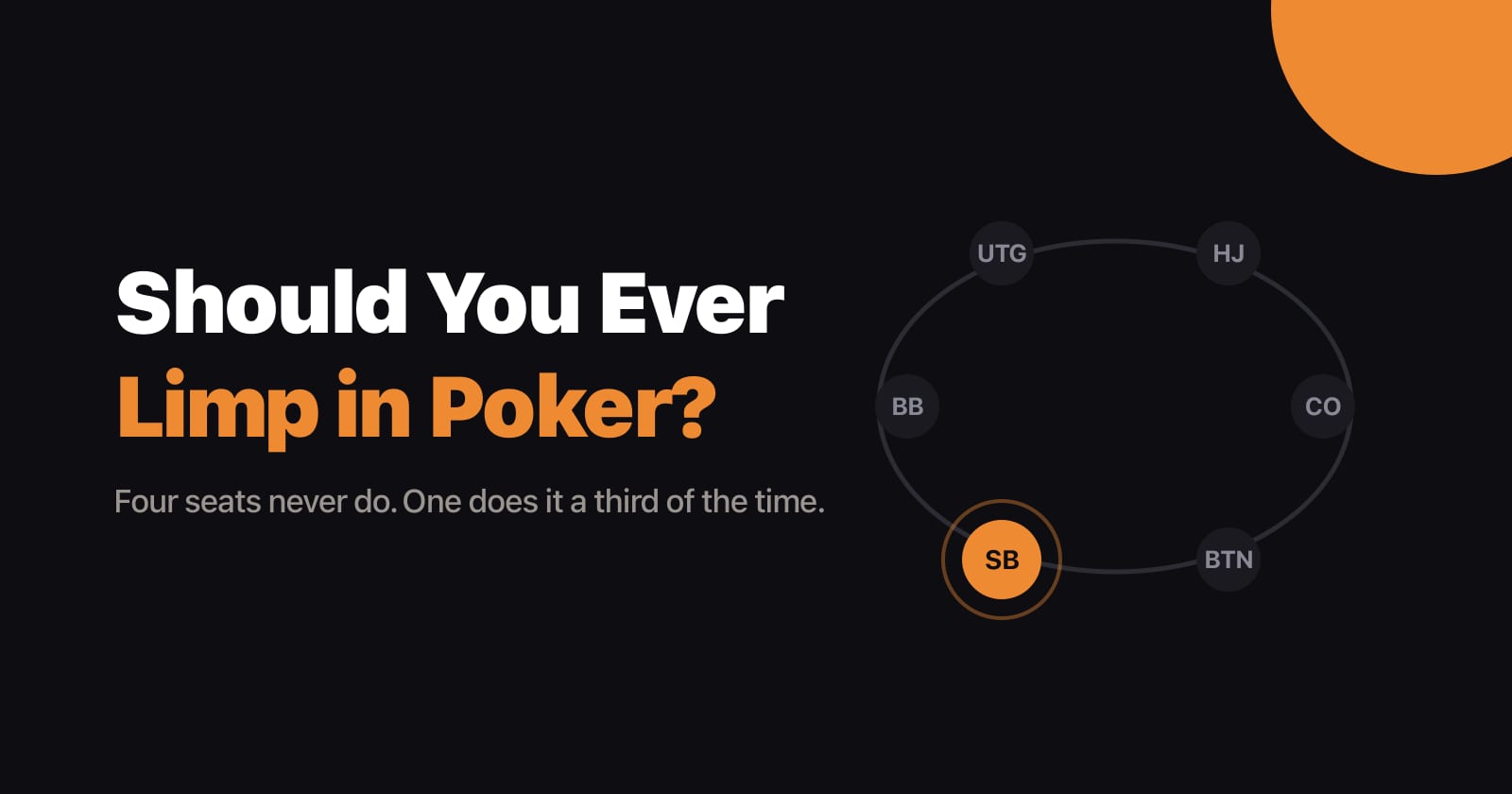
Limping in Poker: What It Is and When It Is Right
What limping is, the five kinds of limp, when the solver does it seat by seat, and how to play against a limper. 6-max cash, 100bb, measured.
The Worst Hands in Poker, and the Ones That Cost You
7-2 offsuit is the worst starting hand in Texas Hold'em. It is also the hand players get right most often. Measured across 1M+ real preflop decisions.
Poker Equity Calculator: Odds for Any Hand or Range
Work out how often your hand wins against a real solver opening range, not a guess. Pick a seat, pick a board, and read the equity off the page.
What Is GTO in Poker?
GTO stands for game theory optimal, the strategy no opponent can exploit. What it means, what it looks like, and when low-stakes players should ignore it.
Poker Variance Calculator: How Bad Can It Get?
A variance calculator that simulates your next 50,000 hands, a plain walk through every number it shows, how big a normal downswing is, and what roll you need.
How to Calculate Pot Odds in Seconds
A working pot odds calculator, the two-step method behind it, the four bet sizes worth memorising, and how to turn outs into equity at the table.
Texas Hold'em Charts: Every Opening Range, Free
The full set of 6-max Texas Hold'em preflop charts, one per position, as readable grids rather than PDFs, plus how to read them and make them stick.
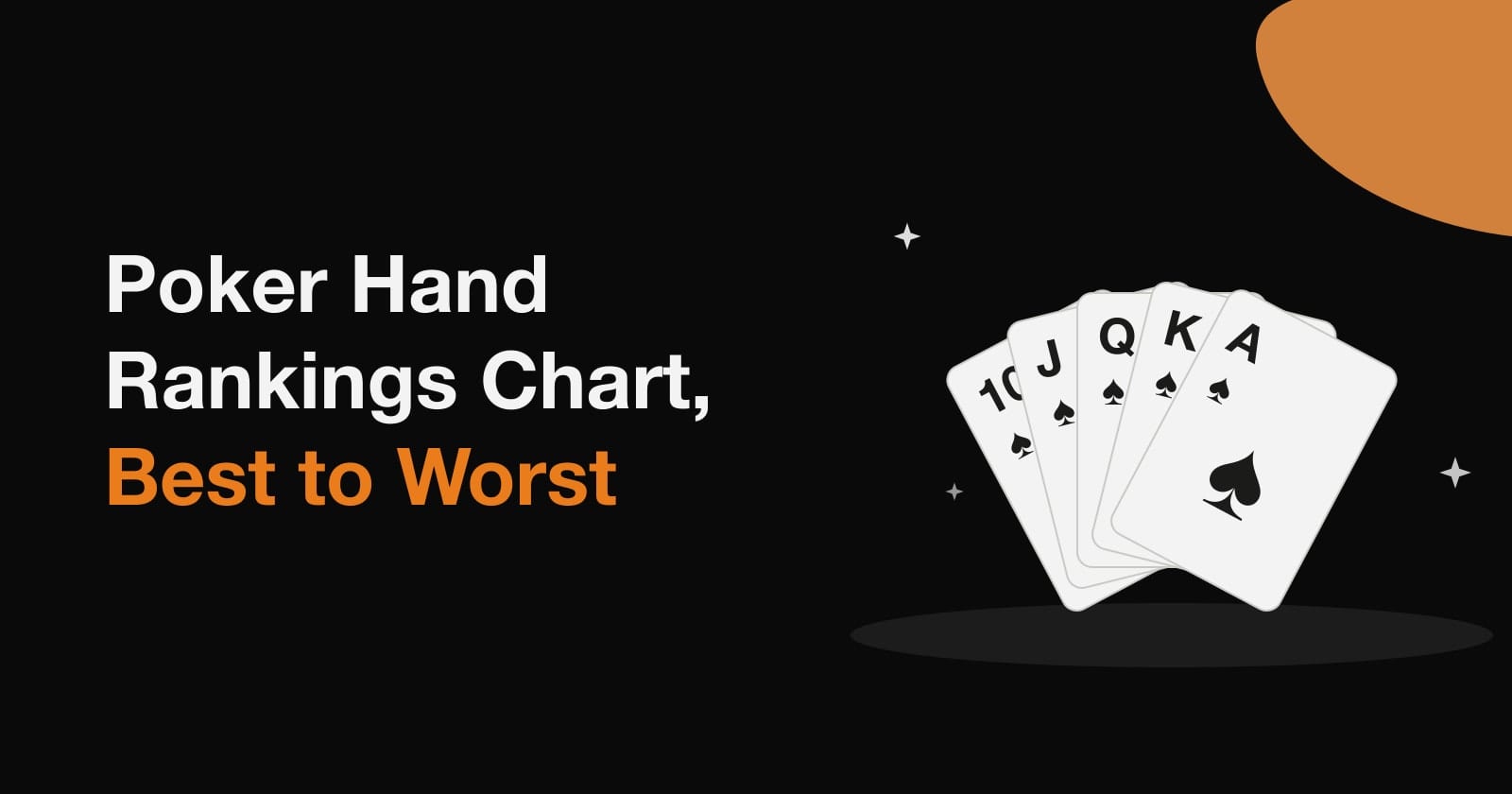
Poker Hand Rankings Chart, Best to Worst
All ten poker hands ranked from royal flush to high card, with what beats what, how ties break, and the two rankings players mix up most.
Small and Big Blinds in Poker, Explained
What the small and big blinds are, who posts them, why they exist, and why the two blind seats lose money for almost everyone who plays them.